Friday, 10 March 2017

A journey to select the glass


It was time to select the glass!


Lamberts Glas many samples to guide their customers in their choices

Robert Christ _ Lamberts G


Very few 'no'_ many 'maybe'_ two 'Yes' it has to be
                                                                                                                                    

The choice of glass textures or colours was well advanced. The participants and I did some of it as the workshops took place.  
I have to stay true to the meanings of the colour scheme we all discussed, even if I have to alter some of the choices made to keep the budget right.

I made all efforts to have our colours/textures/patterns harmony kept, at the same time as reducing the number of glass panes purchased to seven. 
I have an allocated budget for this new order which also is inclusive of the special reduction because of the generous sponsorship by Lamberts Glas of this project. 

I also have to bear in mind which glass I have in stock at my studio that will be used for this design.


I travelled to Germany by train at the lower cost of the European InterRail ticket . 
If one travels from Shrewsbury to an airport, and an airport to Waldsassen, it is all much better to take the train with an afternoon/evening in London.
It was just about time to view the Paul Nash exhibition thinking of the next commission I discussed and had a meeting just before this journey.  It is for the Royal Air Force Centenary Anniversary. Hopefully it will be the next #journal.

I worked on my iPad as I travelled, enjoyed chatting in German now and then with the passengers sitting by me.

The peak times of the Lamberts Glas day were my all inspiring hours at their very special heritage building and as I was in the train leaving Marktredwitz. 

I had left the site all infatuated (nearly flying) by the privilege of the superb mouth blown glass I had purchased all advised by a knowledgeable gentleman sales director Manfred Mislik who placed it all in this 'trolley'. 

my 'trolley' at its very early stage


The memories for ever
                                                          

15th February 2017! 
At my arrival
                                             

Robert Christ, Vice President, took me the closest possible to the masters of the trade all hard at work, mouth blowing and shaping the glass.

I filmed as I listened to Robert.

Fire, furnaces, agile moves of heavy metal rods, shaping, blowing, the synchronisation of bodies complementary one to an other, all fast, a rhythm and pace to keep.
A glass blowing pace and agile power of the craftsmen I wished to keep as true as possible in the film.

It will be hard to cut my glass without the memory of what I followed all live for about two hours.
The glass has been delivered to my studio since then and the handling has never been so 'loving and measured'!

KAE Films edited my films. Guest Artist for the project #margaandcollections #artscouncilengland. 
KAE Films is usually the one on site filming me in the making process of this stained glass project. (vimeo.com/user49985738)

PACE & PANES


For my departure
    
I had the delight of the company of a retired jolly lady who chose to come by me maybe because I smiled from my sit, my head turned towards her when she had entered the coach. She knew she had someone to make a conversation with.  


She was as chatty as my granny Claudinette was, same vivacity of mind one will read in her cheeks. For the most, like my granny, her ancestors had worked in the trade of glass.  

But even better in the skilful trade of mouth blown glass. She was confident, all very proud too, it had been a local skill for generations Czechs and Germans neighbours worked at together. 
She knew all of the filmed skills I was displaying on my camera. Of the mouth blown glass technique for stained glass art, she approved all what I shared with her. 

Her neighbour at home was a stained artist too! At Regensburg, we parted as if we'd known each other well. She waved goodbye behind the window when her train left the station, me waiting all in contempt for my next journey. 


/////////////////////////////////////////////////////////////////////////////////////////////////

Marga & Collections' glass panes and colours


I took two books in my luggage. 
I did find the quiet times to read.
I opened Outrun first. 
The job the character does for the RSPB speaks for a bond anyone may live with wild life UK birds, It refers to the lists the children and I worked from at the workshop A Touch of Glass.
To my surprise it inspired me for the cartoon's upper skies beyond the hills and the glass I had to select from the stocks at Lambert Glas.

A glass for this Noctulicent Cloud in a deep night blue 

Amy Liptrot's character of her novel The Outrun ( page 90, Canongate 2016 ) learnt to identify clouds and thinks:
"I become interested in a fairly recently discovered meteorological phenomenon: noctilucent cloud, literally 'night shining', the highest and one of the rarest types, drifting in the upper atmosphere. Unlike most cloud it is made of ice crystals rather than water droplets. It's usually invisible but just after the sunset around midsummer, in deep twilight, the tilt of the earth allows it to catch the last light of the sun. Sometimes known as 'space cloud', its first recorded observation was in 1885, tow years after the eruption of Krakatoa. It could be that the ice crystals have formed around specks of dust _ from volcanoes, meteors or space-shuttle exhausts. I like the idea of pollution creating something beautiful."  

The character likes "the idea of pollution creating something beautiful". 

Likewise, all young participants of the first workshop still wished to present the ambiguity of our reading of Nature or our environments, the odd source of new visuals we all commonly may encounter in the media, photographic materials or where we live each day straight before our eyes. 

Something that we may read "creating something beautiful" in our mind, even if we know how it puts wild life and humanity at risk.


Blacks and depth of woods, like Margaret Agnes Rope depicted
the duality of attraction and repulsion of the woods and their mysteries. 


The Uranium Glass, or Vaseline Glass was on display in the 
Museum of Applied Arts in Budapest. A rare chance to view it in full glow.

Uranium Glass in the exhibition In the mood for Colours Budapest
Czech blue glass Bohemia mid-C19th


A glass for Heavens of Noctulicent nights and Greens of lands to go for a pause


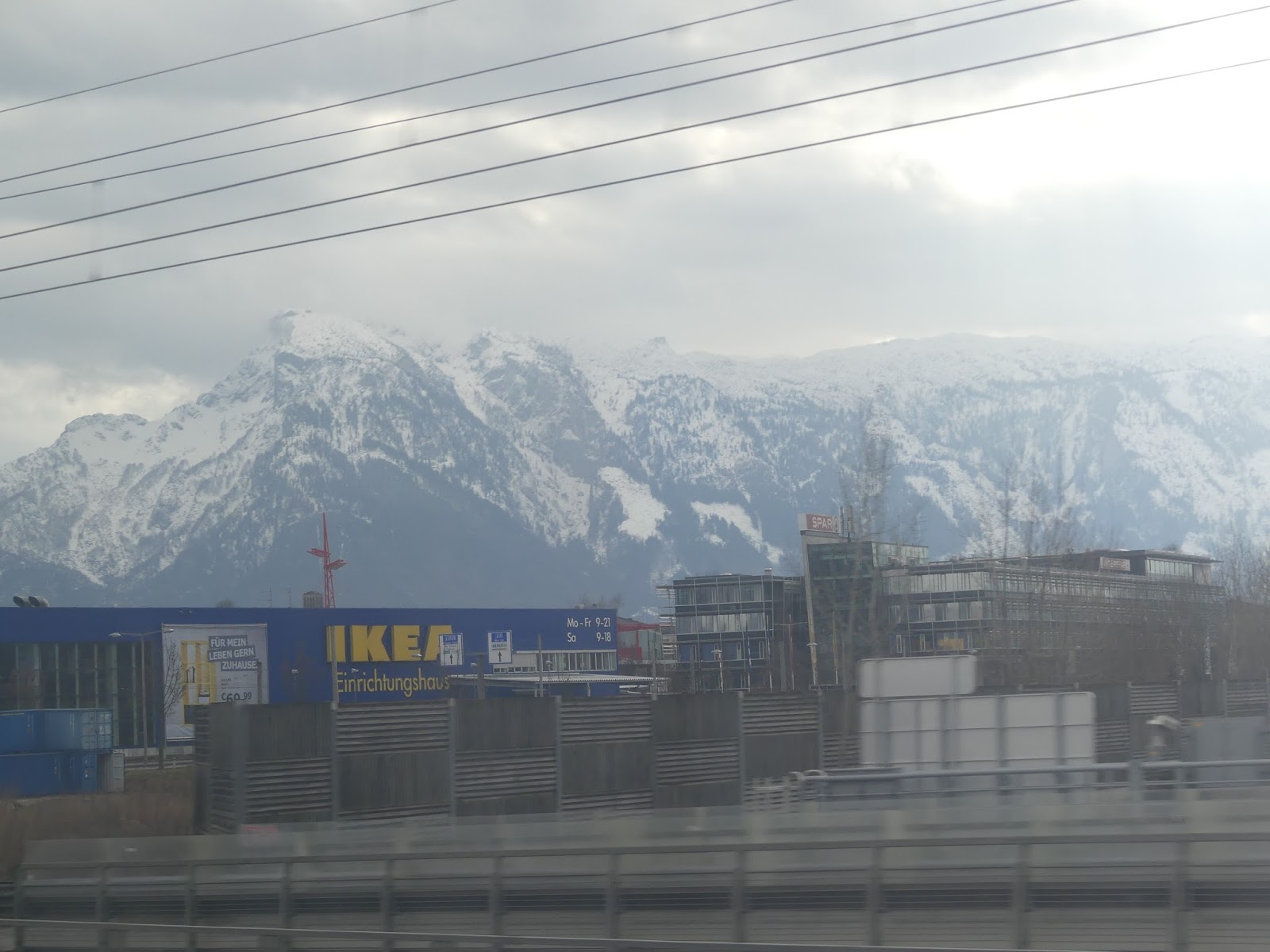
Ikea and the Alps on the way to Salzburg, consumers and offers to dream


walls to protect, to part, to hide, to paint on, to project images on


Reds for energies to slow down as autumn comes, 
for veins of blood to keep us going for years
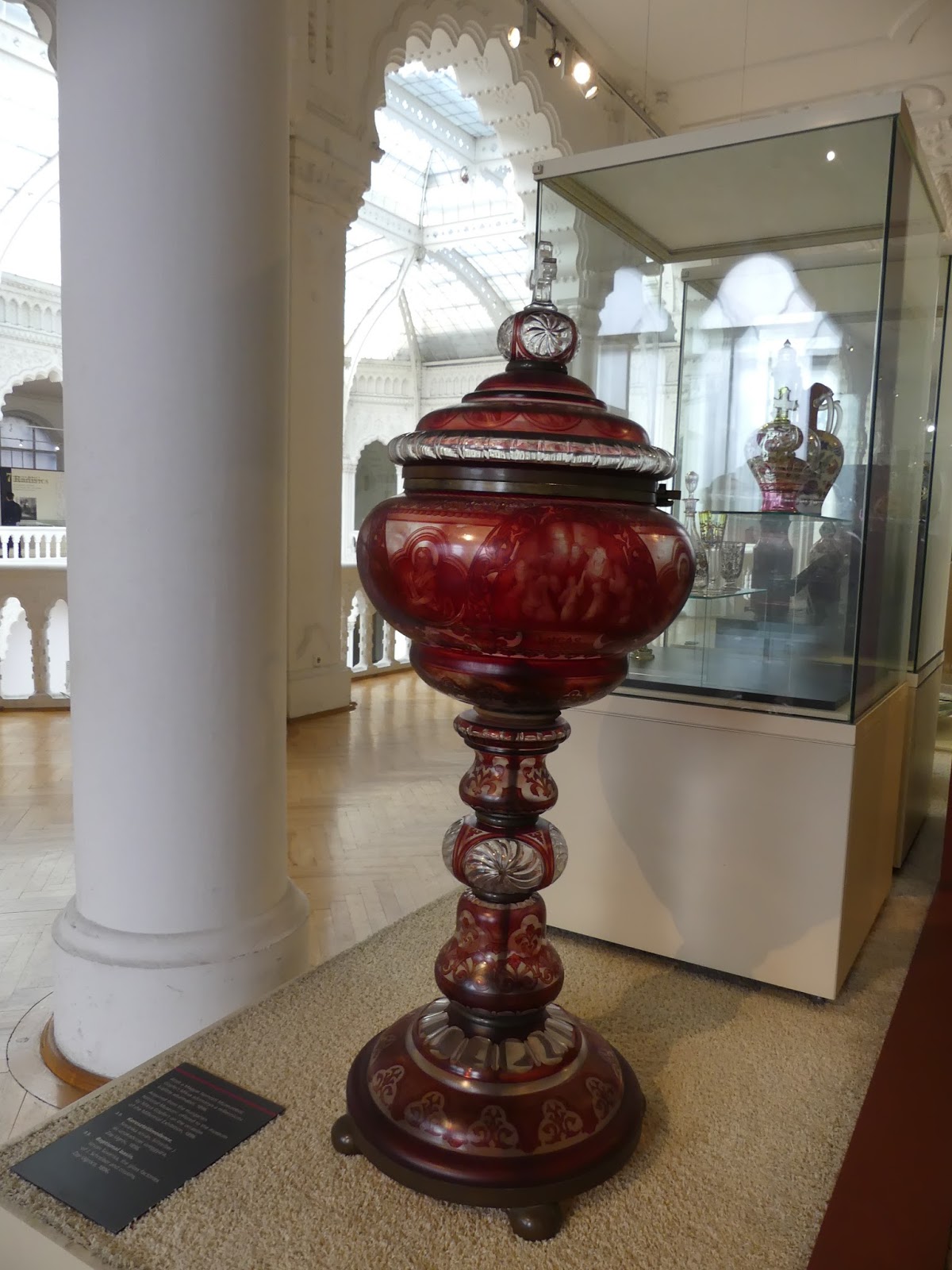

Engraved flashed glass baptismal basin 1896
detail of the engraving


Colours, their source, our use or the message we receive
 from statements they place before our eyes 


Public sites like Szimpla  all to do with creative recycling


TIME to BOND CARTOON & GLASS has come


Tuesday, 13 December 2016

Cartoon & Stained Glass Painting Workshop


It took place on the 10th, 18th, 19th November, 3rd December

  Nathalie asked 
>>Did you live it as if you were contributing to the design of a craft project or an art project?<<

>>The project felt more of an art response due to the level of creativity, ideas and concepts behind the work.<<


Our visit at Shrewsbury Museum on 10th Nov.

                                                                                                                                                                  page4image17280 page4image17440 page4image17600

Not wishing to limit the project to the fact that Margaret Agnes Rope was of the first women to be in the world of stained glass art, the workshop was open to all, and to my surprise we were all of the same gender. How come?

The group of participants was of 6 adults who had responded to the promotion of the workshop and of 6 students of Priory School (an 11 to 16 secondary school with academy status first opened in 1939). 

The participants knew nothing about the artwork of a stained glass window.

After viewing the exhibition, we all introduced to each other
>>Before the workshop I knew nothing about interpreting or creating stained glass windows. It was for me a wonderful eye opening experience and I can now appreciate how many different skills are needed. I get pleasure now in seeking out stained glass examples to admire or interpret. <<


first day _listening to Nathalie
Art and design is a popular and strong subject at Priory School. The school has a close working relationship with our students and try to offer them a broad range of experiences in the Visual Arts beyond the classroom too.

At Key Stage 3 students have the chance to work with and learn from local art and craft practitioners. At GCSE topics are student led.
Six students who took part were 14 to 15 years old and in their first year of their Fine Art or Graphics GCSE and will hopefully use the work they produce on this project as part of their  coursework, which will go towards their final assessment. 


After the Museum Collections, we toured the Heavenly Lights


Our first day at Nathalie's studio or the main hall of the E.B.W. on the 18th Nov.

The essential choice for each participant of what their contribution to the design of the window would be lead to discussion, presentation at the end of the day.


>>The adults and the school group sat separately to work on designs but did share discussions and were all united in our concern to convey the ideas of continuity, circle of life and care for the environment for future generations. <<

Judy shows where her ideas
are  placed in the design
Judy presents her geological study of
the hills to be placed behind the tree of birds
>> Great opportunity to hear others opinions and insights <<

KAE Films stood by as the ladies who worked on
the theme of a garden were studying the feasibility of their choice
 to the full size cartoon in Nathalie's studio


Notes about the themes selected by Priory School students:
Ishbel Newman, Tree roots
“I have drawn tree roots, being destroyed by pollution which is presented by bright, unnatural colours. This also shows that although the tree looks fine from the top and no effects can be seen yet, it will have effects later that we can not see yet”

Josie Ellmore,  Spooky woods
“woods’ spookiness. How Nature is spooky alongside of beautiful _ nature pure beauty that is free. It comes with life and has the price of nothing”

Katie Hilbert, Plastic bottle
I drew this because I thought that it represents how our society has changed and how we use plastic more. It damages the environment and it leaves a horrible mark from our generation. I chose my design of plastic water bottles because it symbolises how our changes in materials affect the environment. We use plastic more and more nowadays and it damages the environment if we do not recycle properly and take more care with what we do with it. I did an oil slick design on one of the bottles to show the pollution in the ground and how bad it is. I made the oil spill a rainbow colour scheme because when the light shines on it in real life it shows all these colours and I wanted to reflect that. I picked dark purple because that was the main colour that I sow. I want to place it near the top of the geology part because it shows that it is our generation that is causing this to happen and that it is a recent change.


Livvy Swift , Ground level, underground level
Rocks, stones, ground level, underground level, tree roots, everything is linked. The idea that with all modern technology, we still need to remember the foundations and sometimes take things back to basics to remember what our purpose is, where we came from, what path we have taken and what path we will be taking.
Neve Jones, Ground level, Underground level
Curls of Ferns Leaves that signify the changes of seasons and how everything is slightly different but we are all the same. The leaves fall and become the ground and when we die we become the earth that we walk upon.
The landscape is cast in shadow on one side. I feel that the sun would be shinning from the right, carving the tree to be dark. The tree looks as though it is eating and engulfing the rocks, which reflect the shadow that is being cast upon it.

Harriet Ford, Bee Hive
Finger prints and Bee hives, the idea that everything is personal and that we want to have our imprint on the future of the world and leave our legacy with the our relatives that are going to be living on what we leave for them. That it was our responsibility.

Sian Joao (Teacher)
Ripples of an ancient land, where enormous glaciers leave footprints of their journey, punctuated by a life now forgotten, fantastical shapes of prehistoric marine life.

Notes about the themes selected by other participants:

Garden Section of Window – notes from Anni and Evelyn

We were considering aspects of Shrewsbury that are iconic including:
·      The large number of Tudor buildings
·      The ‘Quantum Leap’ sculpture near the Welsh Bridge
·      The Welsh and English Bridges
·      The skyline with St Alkmund’s, St Mary’s, St Julian’s and St Chads church spires
·      The Quarry Park and Dingle
·      The distinctive loop of the river round the town.

Much of this was not relevant to the garden itself, but some Tudor motifs / patterns from the buildings may be incorporated into the section above as may the skyline.
We used the loop shape that the river makes around the town to form a path leading across the garden, separating different areas and allowing a journey through landscapes with different meanings.  The path could be represented as a gravel type path picking out colours from the geological section of the window.  We envisaged a range of different people using the path, eg joggers, parents and children / babies, cyclists, dogs etc.

From right to left the path leads from a wild area of ferns, bluebells, wild garlic (growing at the base of a tree which leads up to the panel above) with mushrooms at the base indicating the recycling of nutrients back to nature. 

Above it is a formal garden inspired by The Dingle and its formal planting.  After discussion with Patricia we all agreed that it would be a good idea to use a labyrinth to represent this formal aspect.  Around the formal garden we placed a lawn for recreational purposes, eg people having a picnic, playing football etc. 

Below the path is an area of meadowland.  Much meadow has been lost in the last 50 years as farming has been transformed by the use of chemicals.  This could either be represented as an area solely comprised of wild flowers such as poppy, buttercup, mallow, clover, daisy, yarrow, campion, plantain etc or it could be represented as crops with flowers growing amongst them.  Pimhill Farm north of Shrewsbury has been organic since 1949 and has photos of poppies and cornflowers growing in the wheat fields (attached).  This is an example of how we can do things that work and also address the needs of the environment.  This area is bee (and other insect) friendly and is adjacent to the bees and insects on the wall.

On the right of the panel is an area of allotments.  There are many flourishing allotment sites in Shrewsbury which are enthusiastically tended by hundreds of local people. 

Beneath the allotments we have placed pictures of fruit as symbols of what can be grown in the allotments but also because Margaret Rope included similar imagery in her work.

We did not come up with anything for the area above the formal garden but discussed the possibility of some temporary land use such as a festival or fair.
At the bottom of the garden section there are insects portrayed on the top of the wall and also a beehive.  In between these we have placed plants – ivy because it often grows on walls and nasturtiums which can also grow on walls (though not as often).  Both have lovely shaped leaves that we thought would look good.


Notes from Pea, Water/Nature
A quote from Ovid
“Not for any one man’s delight has Nature made the Sun, the Wind, the Waters; all are free.”
The theme of the Labyrinth.
I wanted to tell about the gingko and the power of nature healing itself the regeneration possible and the continuation of this beautiful potential in nature. The vibrant yellow of the gingko   
I wanted to talk of the basic need for water, that all is water, and to refer to the struggle in America to protect the waters. 
God as a circle a golden ball. 
In the original painting there is a central sculpture and paths to it which creates a circle with a perspective change that has it sat as a circle and I thought about paths and journeys and nature and cycles and considered a gold circle to refer to the sun and to the higher power and thought of the beauty of walking in nature and the power of prayer in nature so the labyrinth. 
You showed me your work holding labyrinths deep within your glass, and it felt very powerful as a pointer to you, Chartres french nature God. 
Sat within the garden within the river. 
Ovid because of Metamorphosis and the study of change and nature and the pointer to medieval thought. 

So gold labyrinth of alchemy in light continuum of nature as God. 


Notes from Janine, Sculptural insects
Ladybirds


Notes from Judy, Geology/structures


Second day at Nathalie's studio or the main hall of the E.B.W. on the 19th Nov.


Each participant had selected their theme and positioned it in the design: 


>>I had expected to feel it as a craft project as the ultimate aim is creating the window. I was surprised to feel involved in a collaborative art project as the work required me to illustrate my ideas on paper.<<


Ambiguity of oil spill with rainbow
colours reflected on polluted waters


>>It was good to have young people in the group, in particular because their thoughts and feelings about the future are in a way more significant than my own as they will likely see more of it.<<


Fossils of our times, the everlasting plastic

Oil spill in waters of rivers
Spooky woods

A garden for the cycle of life
Pea, Evelyn, Anni agreeing the spirit of the garden or the labyrinth
A labyrinth out of a quote about water
Endangered species of  insects as sculptures
A bee hive as our finger print for the future of the world
spooky woods and the beehive, the finger prints turned into a pattern

Behind the surface of hills lay the colours of their geology

Roots of trees sickened by the pollution of Earth
the roots of the trees

the time to test glass painting had come


Last day at Nathalie's studio or the main hall of the E.B.W. on the 3rd Dec.


>>It was totally a new learning experience, despite being involved in the creative industries my whole career, it was wonderful to discover a whole new approach to creative expression<<  (Sian, teacher accompanying the youths)


on the glass easel, before natural light
eyes fixed on glass samples


We selected the glass colours for each theme looking at the sample boxes of St Just ( French glass) Tatra (Polish glass) and Lamberts glass (our sponsor, German glass).
looking a the Lamberts Glas catalogue online
a piece of st Just glass in my stocks on display
Lamberts Glas, our sponsor for the project
one of the catalogue pieces we all agree to select


the earth tones selected

At the centre of the garden Evelyn was drawing with so much care, 
will be the labyrinth with Ovid's quote


Labyrinth pattern and words selected by Pea for
the centre of the garden

END of the 
FIRST WORKSHOP.

SaveSave